Operating context
Signals, knowledge and decisions move through a controlled journey built around Lending operations. Each point represents a person, trusted information, a business rule or a connected system contributing current context.

Connect ANNA, SAM Digital Employees and lending teams across applications, eligibility pre-screening, documents, borrower service, payments and controlled collections workflows.
Discuss Lending

Signals, knowledge and decisions move through a controlled journey built around Lending operations. Each point represents a person, trusted information, a business rule or a connected system contributing current context.
AI assistance and human judgement stay connected as each interaction progresses. Intelligence supports understanding and action while explicit controls preserve confirmation, authority and escalation.
Industry workflows carry their own language, expectations and decision points. AIIT starts with those operating realities, mapping where automation can make access simpler and where specialist judgement, policy checks or sensitive handling must remain central.
For Lending, the first step is to define the journey in operational terms. AIIT identifies the questions people ask, the information required, the systems involved and the moments where confidence or authority changes. This creates a bounded design that teams can review before automation is introduced.
The experience can then combine Omnichannel application intake and guidance, Document extraction, validation and follow-up, Real-time originator, assessor and service-team assistance. Approved knowledge provides grounding, workflow rules preserve required steps, and integration points connect the conversation to current business context. If the request becomes uncertain, sensitive or exceptional, the interaction can pass to a person with the relevant history attached.
Implementation should progress in observable stages. A focused first journey gives stakeholders space to test language, decision boundaries, handovers and operational ownership. Feedback from real use can inform measured refinement without turning the system into an uncontrolled collection of disconnected responses.
The potential value is practical: Create more complete assessment-ready applications; Keep borrowers informed throughout the loan lifecycle; Give lending teams approved knowledge and structured context; Preserve human authority for credit and hardship decisions. The exact result depends on the organisation, its source information and the process being improved, so AIIT keeps discovery centred on the work itself rather than making assumptions about outcomes.
Operating ownership continues after launch. Source information needs responsible owners, journey changes need review and service teams need a clear way to report unexpected behaviour. These routines help the capability stay connected to current business practice rather than becoming a static layer around a changing process.
AIIT brings operational and technical perspectives into the same conversation. This helps teams evaluate not only whether a journey can be automated, but whether it can be supported, governed and improved with confidence over time.
AIIT brings origination, borrower service, collections and employee assistance into one governed operating model. Journeys are configured around each lender’s products, credit policy, systems, conduct obligations and human authorities.
Support consumer and business lending from first enquiry through servicing with consistent, governed journeys.
Coordinate enquiries, applications, supporting documents, valuation steps, conditions and settlement communication.
Create responsive digital application and servicing experiences across voice, chat, messaging and email.
Connect borrowers, dealers, brokers and finance teams while keeping credit decisions with authorised people.
Support vehicle, equipment and captive-finance journeys from quotation and application to account servicing.
A single platform can support prime and specialist portfolios without pretending each applicant or lending product follows the same path.
Deliver fast, clear service to borrowers who expect smooth digital access, proactive updates and channel choice.
Collect fuller context, explain requirements carefully and route exceptions or vulnerability to trained people.
Support personal, vehicle, point-of-sale and other consumer credit journeys within approved product and conduct controls.
Coordinate applicant, guarantor, asset and financial documentation for more complex commercial files.
ANNA can answer approved questions, collect an application, request evidence and explain progress while preserving clear boundaries around advice and credit decisions.
Borrower “Hi ANNA, I started my vehicle-loan application last night. What am I missing?”
ANNA “After I verify you, I can check the application. Your income document is recorded, and the lender still needs the latest statement listed in your secure upload request.”
Borrower “Does that mean I’ll be approved?”
ANNA “An authorised lender makes that decision. I can help complete the file and explain the next step, but I won’t predict or promise the outcome.”
Borrowers can begin in one channel and continue in another. Identity, permissions and available actions are checked for each interaction rather than assumed.
Natural inbound and approved outbound calls
Guided applications and secure assistance
Reminders, replies and secure links
Context-aware enquiries and document follow-up
ANNA handles conversations, the AI Workspace supports employees, and SAM Digital Employees coordinate documents and systems. Together they reduce avoidable administration without bypassing the lender’s assessment process.
Answer approved product questions, understand purpose and preferred next step, and capture consented contact information.
Ask relevant questions in sequence, explain requested information and help applicants complete each administrative stage.
Apply lender-approved preliminary rules and route results for the appropriate next step without making a final credit decision.
Request identity, income, expense, asset and supporting documents through secure, trackable workflows.
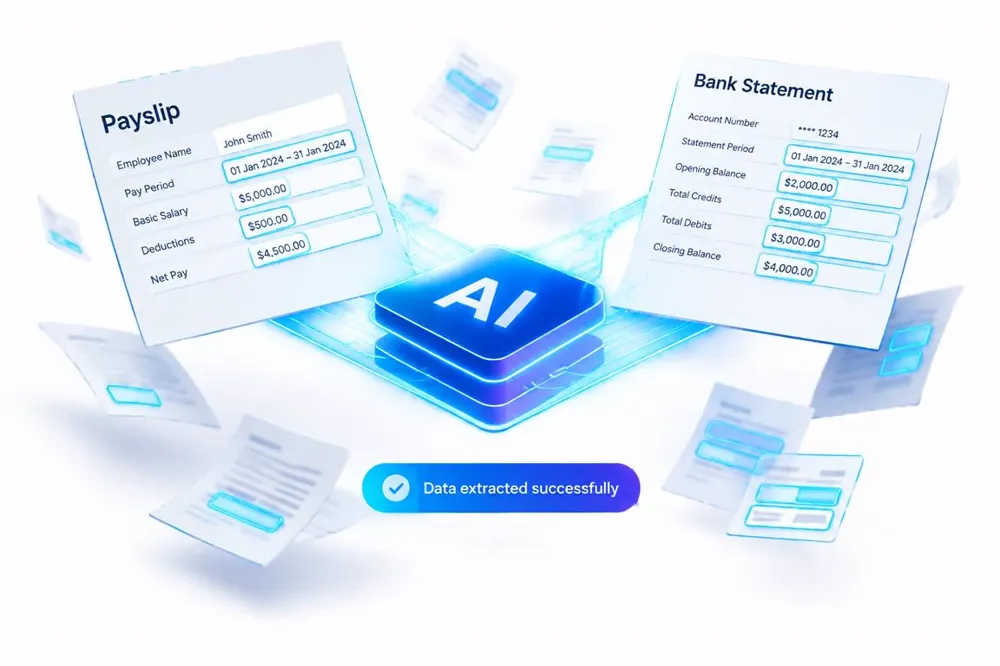
Extract relevant fields from applications, identification, payslips and statements, then flag missing or inconsistent information for review.
Compare submitted data with permitted internal and external sources and route mismatches or low-confidence results to staff.
Give applicants and employees approved information about products, criteria, fees, terms and required evidence.
Explain the current stage, outstanding items and next expected action using live case information where integrated.
Originators, brokers, assessors, service teams and collectors can work from the same approved knowledge and borrower context. Suggestions remain reviewable, and role permissions determine which actions are available.
Surface approved answers, policy references and process guidance during borrower conversations.
Prepare relevant context and recommended administrative next steps while the employee retains judgement.
Continue a servicing or document conversation by SMS without losing the original interaction context.
Support suitable multilingual conversations with the original content available for review.
Bring staff into a digital interaction with the borrower history and work already completed.
Populate draft fields from conversations and documents for staff or applicant validation.
Create structured notes, commitments, missing items and follow-up tasks for review before saving.
Find approved lending policy, process, product and service information without switching systems.
Provide approved balances, due dates, payment history, interest information and status from connected systems.
Help borrowers request statements, settlement figures and available account documents.
Guide approved contact-detail, preference and direct-debit administration with suitable verification.
Deliver consented reminders and secure payment pathways before and after due dates.
Explain approved options and create requests for changes, additional payments or payout information.
Capture the issue, explain available policy information and route disputed or returned payments for authorised resolution.
Use configured events to initiate considerate contact before an account deteriorates.
Identify language indicating financial difficulty or vulnerability and transfer promptly to trained specialists.
Prepare fee-waiver, complaint and exception requests with complete context; authorised staff decide the outcome.
Approved workflows can read and populate lending and servicing systems, compile review material, trigger follow-up and preserve an audit trail. Confidence thresholds and approval gates stop automation whenever authority or judgement is required.
Classify the request, identify the borrower and account context, detect urgency, vulnerability or a complaint, and select the approved workflow.
Send the case to origination, underwriting, risk, settlement, servicing, collections or hardship teams with a structured summary.
Complete permitted actions, request missing information, issue approved confirmation and schedule follow-up while recording each step.
AIIT can configure lending journeys through a visual platform and connect them to the existing technology environment, reducing the need for isolated tools for each channel or department.
ANNA manages natural, interruptible conversations across voice and digital channels.
Lending employees receive live knowledge, guidance, summaries, translation and case context.
SAM Digital Employees coordinate applications, documents, systems, queues, approvals and follow-up.
Answers are grounded in approved policy, product, procedure and access-controlled knowledge.
Applications, statements, identification and correspondence become structured, reviewable work.
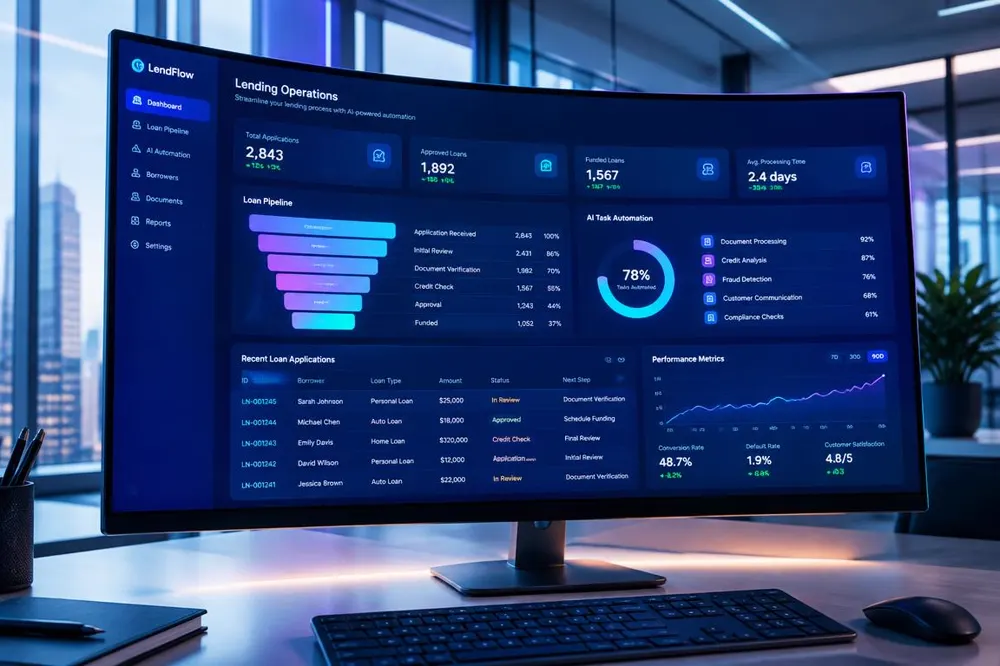
Teams inspect application progress, contact outcomes, handovers, service reasons and unresolved work.
Loan origination and management · Core banking · CRM · Contact-centre platforms · Identity and verification · Credit and data services · Payments · Document management · Case management · Analytics
AIIT defines what each Digital Employee may know, say and do. The lender’s policies, New Zealand obligations, approval limits, disclosures, authentication and escalation rules shape the operating design.
Specific privacy, security, hosting and assurance requirements are confirmed for the selected deployment. AIIT does not claim that a technology label alone guarantees compliance.
Grounded knowledge, narrow permissions and human review for consequential work.
Data boundaries, access controls, audit records and deployment choices aligned to the implementation.
Voice, chat, email, SMS, images, documents and spreadsheets within approved journeys.
Configurable origination and servicing Digital Employees for direct, indirect, prime and specialist contexts.
Operational reporting around journey progress, contact outcomes, handovers and unresolved work.
Customer conversations, employee assistance and back-office workflows coordinated through one platform.
ANNA can deliver approved reminders, explain available account information, provide secure payment options and record outcomes. Hardship, disputes, vulnerability and unusual circumstances transfer to trained people.
AIIT can assess connections to loan origination, loan management, CRM, payments, contact-centre, identity, document and analytics platforms. Access is limited to each approved task.
Borrowers can get timely answers, application guidance, document requests and status updates through their preferred supported channel. Context follows the conversation when a person takes over.
No. ANNA can collect information and apply approved preliminary routing rules. Creditworthiness, affordability, pricing, approval and responsible-lending decisions remain with authorised people.
Yes. It can guide eligibility questionnaires, capture application information, request documents and check completeness before the file reaches an assessor.
Yes. SAM Digital Employees can coordinate routine account enquiries, reminders, payments, servicing requests and early-stage outreach. They operate within approved conduct controls and human escalation paths.
Suitable journeys can use voice, chat, SMS, email, WhatsApp, mobile or in-app messaging, with shared context subject to identity, consent and privacy controls.
The approach can be configured for banks, credit unions, mortgage and personal lenders, brokers, vehicle finance, online lenders, equipment leasing and captive finance providers.
Choose origination, document collection, status updates, servicing, early-stage collections or staff assistance. AIIT will map permissions, human decisions, integrations and measures before rollout.
Lending is a race against drop-off. Applicants who wait for a callback, struggle with document lists or hear nothing for days often go elsewhere. A Super Agent Model is a Digital Employee that keeps every application moving: it responds instantly to enquiries, pre-screens applicants, explains requirements, collects and checks documents, provides status updates and supports loan servicing — on the phone, by chat, SMS, email and WhatsApp.
SAMs work at machine speed. They extract figures from payslips and bank statements in seconds, check them against application details, and apply your credit policy pre-screening rules exactly as configured. They never lose a file, never forget a follow-up and are available after hours and on public holidays, when many borrowers finally have time to deal with their finances.
Your lenders, brokers and credit assessors stay focused on credit judgement, responsible-lending assessment and relationships, supported by complete, well-organised files.


Responds within seconds to every enquiry, explains products and qualifies interest against your criteria.
Guides applicants through forms in conversation and completes the application with them.
Requests, receives and checks payslips, statements and IDs, chasing anything missing automatically.
Applies your pre-screening rules, calculates serviceability indicators and packages files for assessors.
Tells applicants exactly where their loan is, what is needed and what comes next.
Coordinates with solicitors, valuers and borrowers so settlement dates are met.
Handles repayment changes, statements, top-up enquiries and early repayment quotes.
Makes early, supportive contact when repayments are missed and routes hardship requests to specialists.
An applicant calls or messages at any hour. The SAM responds instantly, explains options and checks basic eligibility.
It completes the application in conversation, asking only relevant questions based on earlier answers.
Required documents are requested with a secure upload link, then read, extracted and cross-checked automatically.
The file is checked against your credit policy rules and packaged with a clear summary for the assessor.
After the human decision, the SAM communicates outcomes, conditions and next steps clearly.
It coordinates settlement tasks and continues to support the borrower through the life of the loan.
A SAM can perform almost any role in an organisation that happens on the phone or on the computer — with the speed of software and the manner of your best team member. These capabilities come standard with every Digital Employee AIIT deploys for lending.
Each SAM has a name, a personality, a natural voice, a defined role and access to the systems it needs — onboarded like a new team member, not installed like software.
SAMs speak with customers and also operate business applications: reading records, completing forms, updating systems and generating documents.
Structured tasks are completed in seconds, following your rules the same way every time, with validation checks and confidence thresholds that route uncertain cases to people.
No rosters, sick days or penalty rates. SAMs answer at 3am, on weekends, at Christmas and during unexpected surges.
A SAM can handle multiple simultaneous calls and chats, so customers are answered immediately instead of waiting in a queue.
Human-like speech with a Kiwi accent as standard, fast response times and clear audio on real phone numbers.
Voice, SMS, email, WhatsApp, Messenger, Instagram and web chat share one memory, so customers never repeat themselves.
SAMs remember previous interactions, pick up dropped conversations and recognise returning customers.
Tone, sentiment and stress cues are recognised, and SAMs adapt their language — or hand over to a person — when empathy matters most.
SAMs can be configured to converse in multiple languages, serving diverse New Zealand and international customers.
When a person is needed, the conversation transfers with a summary, so no customer has to start again.
Per-client data isolation, encryption, role-based permissions and complete audit trails of every action.
Every interaction is recorded, transcribed and summarised for quality assurance and compliance.
Performance is monitored, gaps identified and knowledge and processes updated across every SAM at once.
More than two-thirds of the hours in a year fall outside a standard working week. Add weekends, Matariki, Waitangi Day, Easter, ANZAC Day, Labour Weekend and the long Christmas break, and most organisations are effectively closed for much of the time their customers need them. SAM Digital Employees keep lending services running through all of it — answering, resolving, recording and preparing work so your team starts each day ahead rather than behind.
There are no overtime premiums, no rostering gaps and no drop in quality at 3am. Every after-hours contact receives the same careful, compliant handling as a mid-morning call, and anything that genuinely needs a person is escalated according to your on-call rules.


Incomplete files are the biggest cause of delay in lending. A SAM tackles this at the source. It knows exactly which documents each product and applicant type requires, asks for them in plain language, checks that what arrives is legible, current and consistent with the application, and follows up politely until the file is complete. Assessors receive structured data, verified figures and a summary of anything unusual.
That shortens time-to-decision and lets credit teams spend their expertise on assessment rather than administration. Every extraction and check is logged so decisions remain explainable and auditable.
SAMs can be configured to ask the questions your responsible-lending obligations require, record the answers accurately and flag anything that needs further inquiry. They do not make final credit decisions; they make sure the people who do have complete, accurate information. Consistent processes help reduce the risk of missed questions and inconsistent treatment of applicants.
After settlement, borrowers still need help: repayment changes, statements, redraws, payout figures and hardship conversations. A SAM handles routine servicing requests instantly, at any hour, and reaches out early when repayments are missed, offering supportive options and connecting borrowers with specialists when needed.
Every SAM begins with discovery. We map the roles, conversations and computer tasks you want a Digital Employee to take on, the systems involved, the rules it must follow and the points where people must stay in control. We then design its persona, voice, knowledge and permissions, integrate it with your platforms, and test it against real scenarios before a controlled launch.
After go-live, AIIT monitors performance, reviews conversations, and continuously improves knowledge and workflows. Most organisations start with one high-volume use case, prove the value, then add further roles until SAMs become a natural part of the workforce. Outcomes vary with call volumes, processes and integrations, so we agree measurable goals with you up front and report against them openly.
Most automation in lending has been built as tools: a form here, a menu-driven phone system there, a chatbot answering a handful of FAQs. Each one handles a fragment of the work and pushes everything else back to people. A SAM is different because it is designed around a role rather than a feature. It is given a job description, the knowledge and systems access that job requires, the policies it must follow and the boundaries of its authority — exactly as you would onboard a new employee.
That shift matters. Instead of asking "which questions can the bot answer?", lending leaders can ask "which parts of this role can a Digital Employee take on completely, and where should a person step in?" The answer is often far more than expected: gathering information, checking it, updating systems, explaining next steps, sending confirmations and following up are all tasks a SAM can complete from start to finish.
On structured work, SAMs operate at a pace no human can match. Reading a forty-page document, comparing figures across several systems, filling in a multi-screen form or drafting a detailed summary takes seconds rather than minutes. Just as importantly, SAMs do it the same way every time. They do not skip a step because it is late in the shift, forget a disclosure because the customer was chatty, or mistype a reference number.
Accuracy is engineered, not assumed. AIIT designs every SAM with validation against source systems, confidence thresholds, mandatory-field checks and clear rules for escalation. When a SAM is unsure, it says so and hands the task to a person with everything gathered so far. Every action is logged, so results can be audited and improved continuously.
The goal is not an organisation without people; it is an organisation where people spend their time on work that genuinely needs them. In lending, that means judgement, empathy, negotiation, complex problem-solving and relationships. SAMs take the repetitive volume, the after-hours shifts, the peaks and the administrative follow-through, and they act as real-time co-pilots for staff during live conversations.
Teams that work alongside SAMs typically find their days change shape: fewer interruptions, less data entry, cleaner handovers and more time for customers who need a human touch. New staff ramp up faster because a co-pilot is always available to answer procedural questions, and experienced staff can focus on the cases where their expertise makes the biggest difference.
Deploying Digital Employees in lending requires the same discipline as hiring people into regulated roles. AIIT defines exactly what each SAM may see, say and do; configures approval steps for high-impact actions; and aligns behaviour with your privacy, security and conduct obligations. Per-client data isolation, encryption, role-based access and full audit trails are standard.
We also recommend transparency with customers. SAMs can introduce themselves as digital assistants while still sounding warm and natural, and customers can always ask for a person. Clear disclosure, consistent behaviour and easy escalation build trust — and trust is what allows Digital Employees to take on more responsibility over time.
Every SAM deployment starts with agreed measures. Depending on the role, these may include answer rates, time to resolution, completed tasks without human intervention, after-hours contacts handled, document completeness, customer satisfaction, staff time released and cost per interaction. Dashboards make these visible from day one, alongside recordings and transcripts that show exactly how each outcome was achieved.
Results vary with volumes, processes and integrations, so AIIT does not promise a universal figure. Instead, we start with a focused use case in lending, measure it honestly, and expand to further roles once the value is proven. Many organisations find that the first SAM pays for its own expansion by revealing just how much of the workload was repetitive, rules-based and ready for a Digital Employee.
At 6am, while the office is still dark, your lending SAM is already working. It has answered overnight calls and messages, completed the routine requests end to end, and prepared a tidy list of everything that needs a person, each item with a summary, the relevant records attached and a suggested next step. When your team logs on, they start with decisions, not detective work.
Through the day the SAM handles the morning rush without a queue, takes on the repetitive contacts that would otherwise interrupt skilled staff, and works quietly in the background on computer tasks: updating records, reconciling information between systems, chasing outstanding documents and sending confirmations. During live conversations it listens alongside your people, surfacing policy answers and drafting notes so nothing is missed.
In the evening, at weekends and on public holidays, it simply keeps going. A customer who rings at 10pm on Boxing Day receives the same careful, informed and friendly service as one who calls at 10am on a Tuesday. Nothing is left to voicemail, and nothing waits unnecessarily for the next business day.
The most successful lending programmes start small and specific. Choose one role or journey with high volume, clear rules and measurable outcomes — for example after-hours contacts, document collection or status updates. AIIT works with your team to map that journey, define what good looks like, identify the systems involved and agree where people must remain in control.
We then design your SAM's persona, voice and knowledge, connect it to the required platforms, and test it thoroughly with realistic scenarios, including difficult and unusual ones. A controlled launch follows, with close monitoring and rapid refinement. Once the first Digital Employee is performing well, additional roles can be added using the same foundations, building a digital workforce that grows with your organisation.
Talk to AIIT in Auckland about where a SAM could make the greatest difference in your lending operation. We will help you identify the opportunity, estimate the effort involved and plan a practical first step.
Although SAMs are best known for answering calls and messages, many of the most valuable Digital Employee roles in lending sit behind the scenes. Any role that is performed on a computer, following documented steps across business applications, is a candidate. SAMs can prepare reports, reconcile data between systems, check forms for completeness, triage inboxes, draft correspondence for approval, schedule work, monitor queues and flag exceptions for human review.
Internal service desks are another strong fit. Staff can ask a SAM how to complete a procedure, where to find a document or what policy applies to an unusual situation, and receive an accurate answer drawn from approved knowledge in seconds. HR, IT and finance teams use the same approach to handle routine employee requests around the clock.
Because each SAM shares the same secure foundations — identity, permissions, knowledge, memory, logging and handover — adding a new role is far faster than building a new system. Over time, organisations in lending can assemble a coordinated team of Digital Employees, each specialised in its role, collaborating with one another and with people to deliver a faster, more consistent and more resilient operation.
Throughout, the principle stays the same: SAMs take on the work that is repetitive, rules-based, time-sensitive or out of hours, and people keep ownership of judgement, relationships and accountability.

ANNA OS provides the conversational intelligence. Each Super Agent Model becomes a specialist Digital Employee. The AIIT Agentic Intelligence Management system gives your Lending organisation the controls to direct, measure, govern and expand the whole team.
Customers can move between voice, web chat, SMS, email, WhatsApp, Messenger, Instagram and other approved channels while AIM preserves the relevant journey context and operating rules.
SAMs pre-screen and prepare files. Credit decisions remain with your authorised lenders, unless you explicitly delegate simple, rules-based approvals.
Yes. It extracts and categorises key figures and cross-checks them against the application.
Yes. It can support brokers with status updates, document requirements and policy questions.
Voice, SMS, email, WhatsApp, web chat and in-app messaging, all sharing one conversation history.
Ready to meet your first Lending Digital Employee?
Design my SAMBrowse 81 Typical SAM Roles — from receptionist and claims specialist to compliance, sales and operations — each a Digital Employee powered by ANNA and managed by AIM.
Tell us what you want to improve. Your enquiry will go directly to the AIIT team in Auckland.